USC · Thomas Lord Department of Computer Science
We study how humans and machines shape each other.
The HUMANS Lab (HUmans, MAchines, Networks & Social Systems): A USC group studying bots, AI safety & human-machine societies.
A research group of the Machine Intelligence & Data Science (MINDS) initiative · directed by Emilio Ferrara
! For the upcoming PhD cycle I can only recruit students who hold an individual fellowship. If you have one and want to join us, please reach out.
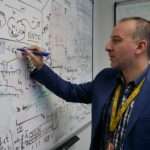
























The people of the HUMANS Lab.
Now
Latest from the lab
- PreprintOpen-Weight Masked Introspection, on whether LLMs can report what changes inside them, is out as a preprint on arXiv
- PaperPALMs, on modeling population preferences in LLMs with multi-construct grounded rationales, is accepted to the EMNLP 2026 main conference
- PaperTemporal Signatures of Coordination, on detecting and anticipating influence operations, is accepted at EPJ Data Science
- PaperFive Myths About Influence Operations, from 25 million tweets across seven state campaigns, published in Systems
- PaperMOSAIC, our benchmark for the moral, social, and individual dimensions of LLMs, is accepted to the CIKM 2026 Resource Track
- PaperEssay in Tech Policy Press: the model you audit is not the model you ship
- PaperOur work on backdoor attacks in vision-language models is accepted to Findings of ACL 2026
- TalkClosing lecture at SICSS Singapore (NUS) — From Bots to Agents
- PreprintManufactured Divisiveness, on invective across seven state-backed influence campaigns, posted as arXiv:2607.14491
- PaperCommunity Detection as Adaptive Diffusion accepted at ACM AI Letters
- DatasetWe release QuantiBias, a benchmark for quantization-induced bias in LLMs, on Hugging Face
- PaperDefeat Devices in AI Systems published in Future Internet
- PaperECHO: Encoding Communities via High-order Operators published in Machine Learning with Applications
- PaperTwo papers at ICWSM 2026: coordinated inauthentic behavior on TikTok, and cross-platform narrative networks
- PaperChange is Hard: Consistent Player Behavior Across Games with Conflicting Incentives accepted at CHI PLAY 2026
Programs
What we work on
What if societies and machines are one system?
Social Bots & Influence Ops
Detecting automated and coordinated accounts; measuring platform manipulation at scale.
AI Safety & Bias Auditing
Behavioral audits of LLMs — deceptive behavior, quantization-induced bias, cultural safety.
Misinformation & Integrity
How false and divisive content spreads, and which interventions actually work.
Network Science
Community detection and diffusion — from theory to scalable open-source tools.
Computational Social Science
Large-scale measurement of collective behavior: elections, crises, human-AI interaction.
Human-Centered AI
Designing AI that serves people and communities: interaction, trust, and alignment.
The Election Integrity Initiative
Our standing election-integrity effort: public datasets, analysis, and briefings on online manipulation around the U.S. elections.
election-integrity.online ↗The team
People
The lab is its people, across computer science and the social sciences.

Alumni hall of fame. Former members now teach at UCLA, Dartmouth, and Minnesota, and research at Google DeepMind, Meta, and Amazon. Where they are →
Selected
Publications
A selection of the lab’s work, kept current from arXiv, Crossref, and ORCID.
- Systems2026
Five Myths About Influence Operations: What 25 Million Tweets Across Seven State Campaigns Reveal
Ferrara - Foundations of Digital Games2026
Extending STRIVE to World of Tanks: A Cross-Game Validation of a Socio-behavioral Player Taxonomy
Bisberg, Chen, Williams, Ferrara - Chen, Ye, Tsai, Ferrara, LuceriACM Hypertext2025
- Chand, Baca, FerraraAI2026
- FerraraFuture Internet2026
- Machine Learning with Applications2026
- ICWSM2026
Coordinated Inauthentic Behavior on TikTok: Challenges and Opportunities for Detection
Luceri, Salkar, Balasubramanian, et al. - ICWSM2026
Bridging the Narrative Divide: Cross-Platform Discourse Networks in Fragmented Ecosystems
Gerard, Hanley, Luceri, Ferrara - ACL2026
Psychological Steering in LLMs: An Evaluation of Effectiveness and Trustworthiness
Banayeeanzade, Tak, Bahrani, et al. - Information Sciences2026
Information Suppression in Large Language Models: Auditing, Quantifying, and Characterizing
Qiu, Zhou, Ferrara - ACM Hypertext2026
Angry but Accurate: Detecting and Profiling the Counter-Misinformation Ecosystem on Twitter
Choi, Ferrara - CHI2026
Change is Hard: Consistent Player Behavior Across Games with Conflicting Incentives
Chen, Bisberg, Williams, et al. - ACM Web Conference2026
Cross-Platform Narrative Prediction: Leveraging Platform-Invariant Discourse Networks
Gerard, Luceri, Blas, Ferrara - Orlando, Ye, La Gatta, et al.ACM Web Conference2026
- ICWSM2026
Tied In on TikTok: Tie Strength and Emotional Dynamics in Algorithmic Communities
Bickham, Chu, Yuan, et al. - EACL2026
GRAVITY: A Framework for Personalized Text Generation via Profile-Grounded Synthetic Preferences
Dey, Rosa, Zheng, et al. - ICWSM2026
Overstating Attitudes, Ignoring Networks: LLM Biases in Simulating Misinformation Susceptibility
Choi, Young, Ferrara - Xu, Shang, Wang, FerraraFindings of ACL2026
- Future Internet2026
- npj Complexity2025
Large-scale detection of multilingual coordinated activity on Telegram
Blas, Saraf, Salkar, et al. - PACM HCI2025
Communication Patterns Predict Team Skill in Multiplayer Online Games
Bisberg, Shaikh, Zeng, et al. - PNAS Nexus2025
Liberals and Conservatives Share Information Differently on Social Media
Chang, Druckman, Ferrara, Willer - Lerman, Chu, Bickham, Luceri, FerraraEPJ Data Science2025
Open Science
Data & Software
Benchmarks, corpora, and tools the community builds on.
OWMI ↗
Open-Weight Masked Introspection: a framework for measuring what LLMs can report about their own computation.
huggingface.co2026QuantiBias ↗
Benchmark for quantization-induced bias and safety drift in compressed LLMs.
huggingface.co2026MOSAIC ↗
Benchmark probing the moral, social, and individual value dimensions of LLMs.
huggingface.co2026ECHO-GNN ↗
Graph-neural community detection: encoding communities via high-order operators.
github.com2026Generalized Louvain ↗
A scalable, open-source revival of the generalized Louvain method for community detection.
github.com2026EDTok ↗
TikTok video IDs for eating-disorder content, collected via TikTok's Research API.
github.com2025Telegram 2024 Election Posts ↗
The largest public Telegram dataset on the 2024 U.S. presidential election.
github.com2024X/Twitter 2024 Election Discourse ↗
Large-scale discourse on X tracking the 2024 U.S. presidential election.
github.com2024Truth Social 2024 Election Posts ↗
1.5 million Truth Social posts on the 2024 election, Feb 2022 to Oct 2024.
github.com2024TikTok 2024 Election Videos ↗
Video IDs for 2024 election content, collected via TikTok's Research API.
github.com2024GET-Tok (Peru) ↗
Multimodal TikTok data on the 2022 attempted coup in Peru, enriched with Whisper and GPT-4.
github.com2024Ukraine-Russia Conflict Tweets ↗
An ongoing collection of tweet IDs on the war between Ukraine and Russia, since Feb 2022.
github.com2022COVID-19 Misinformation Labels ↗
Large-scale labeled misinformation cascades on COVID-19 vaccines, built by label refinement.
github.com2022US 2020 Election Tweets ↗
A large-scale Twitter dataset tracking the 2020 U.S. presidential election.
github.com2020COVID-19 Twitter Dataset ↗
One of the most widely used pandemic social-media corpora in the field.
github.com2020League of Legends Dataset ↗
Behavioral traces from team-based online games for studying performance.
Harvard Dataverse2018GEM ↗
Graph Embedding Methods: a Python library of node-embedding algorithms (Goyal & Ferrara).
github.com2018